Look around your home right now. What does it ask of you? Does its very presence whisper a to-do list? Dust me. Organize that drawer. Fix that squeaky hinge. Style that shelf for the ‘gram. Or does it embrace you, inviting you to simply be: to sink into the sofa, to gaze out the window, to lose track of time?
We’ve conflated homekeeping with hustle. We see aspirational images of perfectly staged, perpetually clean spaces, and we internalize a new standard: a “good” home is a performative home. It must look ready for a photoshoot at any moment. This turns our sanctuary into a silent, demanding supervisor.
But what if we designed our homes not for performance, but for peace? What if we built spaces that move at the speed of a deep breath, not the frantic pace of a productivity app? Welcome to the philosophy of the Unhurried Home. It’s not a style; it’s a stance. It’s the art of creating a dwelling that prioritizes human experience over visual perfection, that welcomes lived-in comfort over sterile showroom readiness.
Let’s redefine what home is for.
Part 1: The Diagnosis: The “Instagram Imperative” and Its Toll
Our homes are suffering from a new kind of performance anxiety. The pressure comes from:
- The Curated Feed: We compare our lived-in, multidimensional reality to someone else’s single, styled, professionally lit frame. We forget that behind the camera is a pile of junk they swept out of the shot.
- The “Shelfie” Standard: Every surface must be artfully arranged with a curated collection of neutral-toned objects. This creates visual noise and turns decor into a chore.
- The Fear of “Undecorating”: We’re afraid of empty space, of a blank wall, of a surface that holds only what we used that day. We fill it with stuff for the sake of filling it.
This creates a home that is constantly “on,” constantly asking to be managed, cleaned, and styled. It’s exhausting. The Unhurried Home asks: Who are you performing for?
Part 2: The Pillars of an Unhurried Home
Pillar 1: “Lived-In” is a Compliment
An Unhurried Home celebrates evidence of life.
- The blanket left crumpled on the sofa from last night’s movie.
- The cookbook left open on the kitchen counter.
- The half-finished puzzle on the dining table.
- The small stack of library books by the favorite chair.
These aren’t messes; they are signs of a life being lived. They tell a story. The goal is not filth, but gentle, human wear. It’s the difference between a museum and a workshop.
Pillar 2: The Beauty of the “In-Between”
An Unhurried Home is comfortable in its transitional states.
- It’s okay for the bed to be unmade until you feel like making it.
- It’s fine for the dishes to sit in the sink until after your morning walk.
- The laundry basket can live in the corner, not hidden in a panic before guests arrive.
This philosophy rejects the tyranny of the “instagrammable moment” and embraces the beautiful, ordinary flow of a day. Your home is a companion to your life, not a backdrop you must constantly reset.
Pillar 3: Sensory Calm Over Visual Stimulation
Instead of asking “Does this look good?”, ask “How does this feel?”
- Touch: Is there a variety of inviting textures within reach—a nubby wool throw, a smooth wooden table, a soft rug underfoot?
- Sound: Can you hear pleasant, natural sounds, or is it filled with the hum of too many electronics? Is there a space of quiet?
- Smell: Does it smell clean, neutral, or of something pleasant like fresh air or bread, rather than artificial air fresheners?
- Sight: Is the lighting warm and gentle? Are there visual resting places (a blank wall, an empty shelf) for your eyes to pause?
An Unhurried Home is designed for the nervous system first, the camera second.
Part 3: The Unhurried Design Guide
1. Choose Materials That Age Gracefully
Select pieces that look better with a little patina, not worse.
- Yes: Solid wood (that can be scratched and refinished), linen (that softens and wrinkles beautifully), leather (that develops a rich character), natural stone (that may etch).
- Avoid: High-gloss laminates, perfect plastics, fabrics that show every stain. These materials scream “fragile” and create maintenance anxiety.
2. Embrace “Slow Decorating”
Your home is not a project with a deadline. It is a story written over years.
- Live with an empty corner until you find the perfect chair, not just *a* chair.
- Collect art and objects that have meaning from travels, friends, or found moments.
- Let your space evolve as you do. This removes the pressure to “finish” a room.
3. Design for Flow, Not Photos
Arrange furniture for conversation, for cozy reading nooks, for easy movement—not for the most pleasing wide-angle shot from the doorway. Create pathways that feel natural, not obstructed by furniture placed “just so.”
4. Create “Sanctuary Zones”
Designate at least one area in your home as a “no-phone, no-task” zone. This could be:
- A specific armchair with a good light and a blanket.
- A window seat.
- A corner of the garden.
This is a place where the only purpose is to be. Its very existence reinforces the unhurried ethos.
Part 4: The Unhurried Homekeeping Rhythm
An Unhurried Home is clean and cared for, but not obsessively so. It follows a gentle rhythm, not a frantic schedule.
- The Daily “10-Minute Tidy”: Instead of a massive weekly clean, do a quick nightly reset. Return items to their homes, wipe counters, fluff pillows. This maintains order without marathon sessions.
- The Seasonal “Letting Go”: With each change of season, do a gentle edit. What haven’t you used? What no longer brings joy? Let it go. This prevents slow accumulation.
- “Clean Enough” is a Valid Standard: Unless you’re performing surgery, your home doesn’t need to be sterile. It needs to be sanitary and pleasant. Let go of the deep-cleaning guilt.
Conclusion: Permission to Simply Inhabit
The Unhurried Home gives you a profound gift: permission. Permission to leave the dishes. Permission to have a blanket fort in the living room for a week. Permission to not have every pillow perfectly fluffed. Permission to exist in your space without turning it into a performance.
It is a radical act of self-trust and self-kindness. It says, “I value my comfort and my peace more than I value the opinion of a hypothetical visitor scrolling Instagram.”
Start by noticing one corner of your home that feels demanding. What can you remove, simplify, or forgive there? Create one small zone of utter calm. Feel the difference in your body. That feeling—of shoulders dropping, of breath deepening—is the true purpose of home. Build from there. Create a haven that doesn’t just house you, but holds you, gently and without hurry.
FAQs: Your Unhurried Home Questions
Q1: I have young kids/pets. My home is chaos. How is “unhurried” possible?
A: With kids and pets, “unhurried” shifts from calm aesthetics to calm acceptance. It means:
- Designating “yes spaces” where toys/mess can live freely without you tidying them constantly.
- Choosing indestructible, washable everything (performance fabrics, washable rugs, stain-hiding patterns) to eliminate stress about spills and stains.
- Seeing the evidence of play (a train track, a blanket fort, dog toys) as signs of a joyful, lively home, not a failure to be tidy.
An Unhurried Family Home is one that prioritizes laughter and play over perfect order.
Q2: Doesn’t this just lead to being messy and lazy?
A: There’s a crucial difference between mess and living. A mess is chaotic, stressful, and inhibits function (e.g., you can’t cook because the kitchen is filthy). Living is orderly enough to function, but relaxed enough to allow for spontaneous life. The Unhurried Home is clean and functional, but not fussy. It’s about removing the unnecessary pressure for Instagram-ready perfection, not abandoning basic care.
Q3: I love beautiful design. Is an Unhurried Home an ugly home?
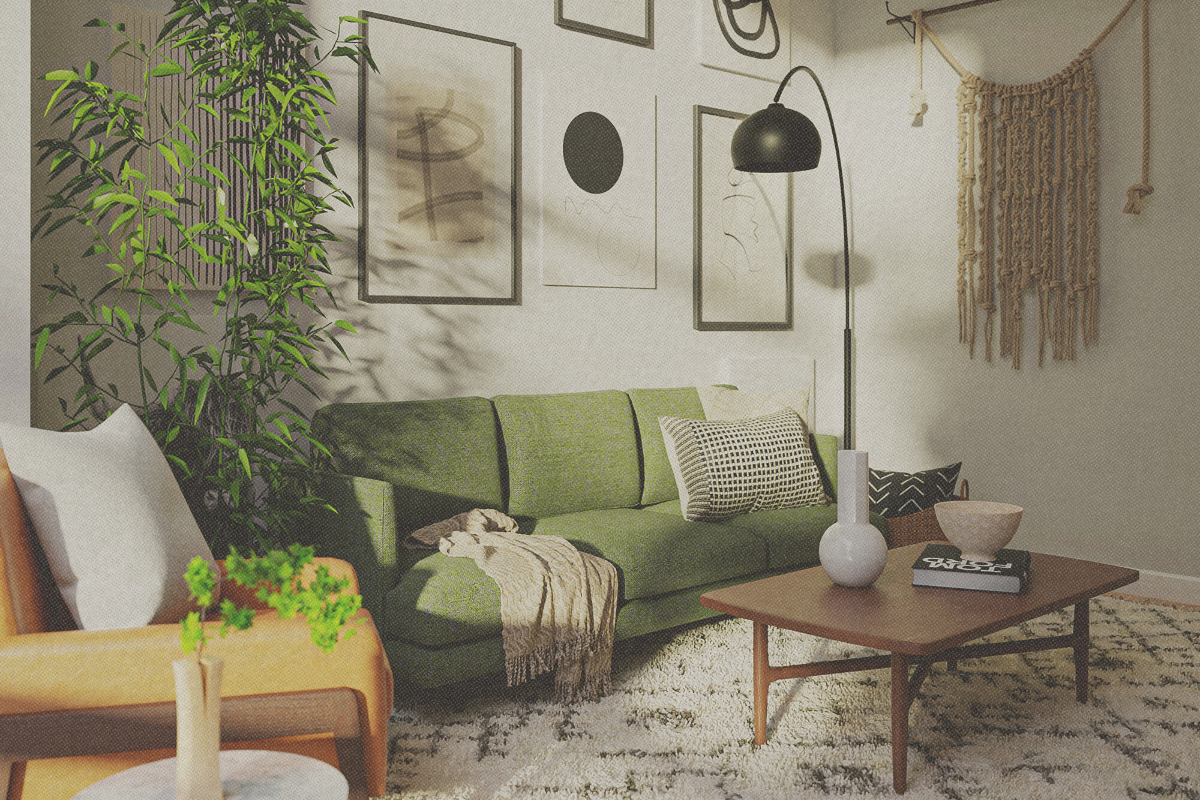
A: Absolutely not! It can be profoundly beautiful. Its beauty is just of a different kind: the deep beauty of authenticity, patina, and soul. It’s the beauty of a well-loved wooden table, a gallery wall of mismatched but meaningful art, a stack of beloved books, sunlight streaming across a slightly rumpled linen sofa. It’s a human beauty, not a staged one.
Q4: How do I deal with a partner/roommate who has different standards of tidiness?
A: Focus on zones and systems, not unilateral rules.
- Agree on shared standards for common areas (e.g., “dishes go in the dishwasher daily,” “shoes go on the rack”).
- Grant each person sovereignty over their personal spaces (their desk, their side of the bedroom). Let their space reflect their rhythm.
- Implement the “10-Minute Tidy” as a shared, non-negotiable evening ritual to reset common areas without it being a blame game.
Q5: What’s the first step to creating an Unhurried Home?
A: Clear one surface and leave it empty. Choose a coffee table, a kitchen counter, or a shelf. Remove everything from it. Clean it. And then… don’t put anything back on it unless you use it this week. That empty space will become a visual and mental breath of fresh air. It will show you the power of stillness and space. It is the foundation of everything else. Start with that one clear space, and let the philosophy expand from there.