Let’s start with a confession: I used to think minimalism was just an aesthetic. A trendy look for people who loved empty white rooms and owned exactly one perfect ceramic vase. It seemed cold, restrictive, and frankly, a little boring. Then, I moved across the country and had to fit my life into a small pod. I was forced to decide what to keep, and more importantly, why.
The process was excruciating. But the result was a revelation. Walking into my new, pared-down space didn’t just feel tidy—it felt quiet. And I don’t mean silent. I mean the noise in my head had turned down. The constant, low-grade background hum of visual clutter—the pile of “to-read” books judging me, the stack of unsorted mail, the knick-knacks I didn’t love but felt too guilty to ditch—was gone.
That’s when I realized the truth: minimalism isn’t about what you own. It’s about what owns you.
We’ve been sold a lie that more space, more storage, and more stuff will make us happier. But neuroscience and psychology point in the opposite direction. Our environments are not passive backdrops; they are active participants in our mental state. A cluttered room is a cluttered mind. A calm, intentional space is a foundation for a calm, intentional life.
This isn’t about achieving a perfect Instagram look. This is about using your home as the most powerful tool you have to reduce anxiety, sharpen focus, and reclaim your mental energy. Let’s explore why less stuff literally leads to more brain space.
Part 1: The Cognitive Cost of Clutter – Why Your Stuff is Stealing Your Brainpower
Your brain is a prediction machine. It’s constantly scanning your environment, processing millions of bits of data to keep you safe and help you decide what to do next. Every object in your line of sight is a piece of data.
The “Attention Tax”
Dr. Sahar Yousef, a cognitive neuroscientist at UC Berkeley, calls clutter an “attention magnet.” Each item—especially if it’s out of place, unfinished, or unresolved—pulls a tiny bit of your attentional resources. A pile of laundry on the chair whispers, “Fold me.” A stack of papers on the counter nags, “File me.” This is known as attentional capture.
You may think you’re ignoring it, but your brain isn’t. It’s performing continuous partial attention, a draining state where your cognitive resources are thinly spread across many stimuli. This tax leads to decision fatigue (you’ve made a hundred micro-decisions about that clutter before breakfast) and reduces your ability to focus on deep, important work.
Clutter and Cortisol
A seminal study published in the Personality and Social Psychology Bulletin found a direct link between clutter and stress. Women who described their homes as cluttered or full of unfinished projects had elevated levels of the stress hormone cortisol throughout the day and reported higher levels of depressed mood.
Clutter signals to your primal brain that your environment is uncontrolled and unfinished. This creates a low-grade, chronic stress response. Your sanctuary feels like a to-do list you can’t escape.
Part 2: The Minimalist Mindset: It’s an Edit, Not a Erasure
Before you panic and think you have to live in an empty white box, let’s redefine minimalist thinking.
Minimalism is the intentional promotion of the things we most value by removing everything that distracts us from them.
It’s not about having less. It’s about making room for more of what matters: more peace, more time, more clarity, more joy. It’s a filter for your physical environment.
The Two Core Questions (Your New Mental Filter)
For every object in your home, ask:
- Does this serve a vital purpose? (Functional)
- Does this spark genuine, deep joy? (Emotional)
If the answer is no to both, that item is a candidate for removal. It’s taking up space—both physical and mental—without paying rent.
The “Container Concept”
This is a game-changer. Instead of asking “Does this spark joy?” for 50 coffee mugs, you first define the container. You have one shelf for mugs. That’s the container. You keep only your absolute favorite mugs that fit in that space. The container sets the boundary, making decisions objective, not emotional.
Part 3: The Mental Health Benefits – Room by Room
How does this play out in your daily life?
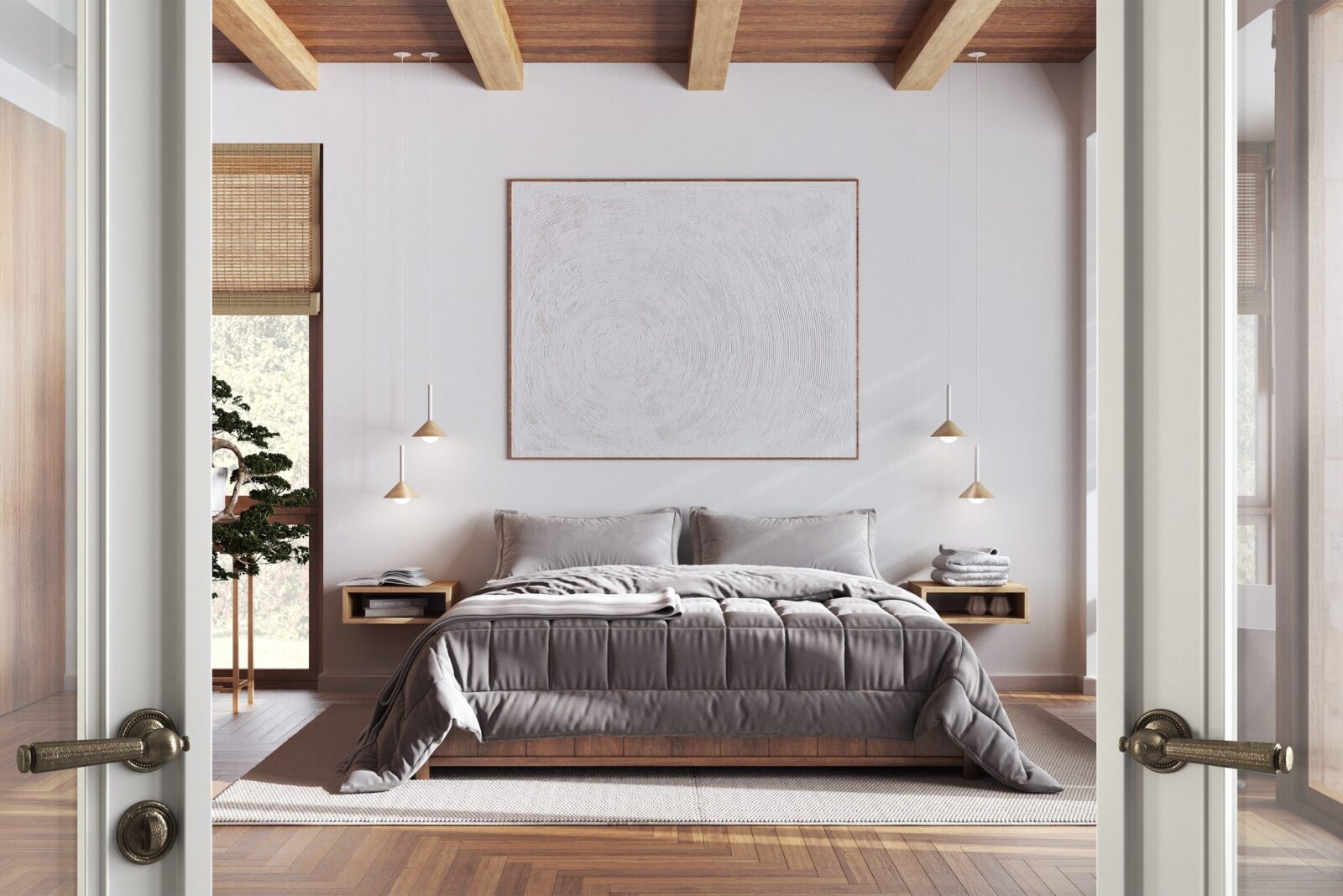
The Minimalist Bedroom: The Sanctuary for Sleep
Goal: Signal “safety and rest” to your brain.
- The Science: A cluttered bedroom is associated with poorer sleep quality. Your brain needs a clear signal that this is a place for restoration, not unfinished tasks.
- The Prescription:
- The Nightstand Reset: Only what you need for your bedtime/wake-up ritual: a lamp, a book, a glass of water. No phones, no chargers, no random receipts.
- Clothes Contained: Use a simple hamper. Implement a “one-in, one-out” rule for your wardrobe.
- Under the Bed: Ideally empty. If you must store, use uniform, opaque containers. “Out of sight” only works if it’s truly out of mind.
- The Result: You walk in and your shoulders drop. The visual noise is gone. Your brain can finally power down.
The Minimalist Home Office: The Focus Factory
Goal: Eliminate decision fatigue and promote deep work.
- The Science: Multitasking is a myth. Task-switching between your work and glancing at clutter can reduce productivity by up to 40%.
- The Prescription:
- Clear the Desk: Literally. Start with a blank surface. Add back only your computer, one notebook, one pen, and maybe one inspiring object.
- Digital Desktop, Too: A chaotic computer desktop is visual clutter. Use folders and a clean wallpaper.
- Single-Task Stations: Have a defined spot for writing, for computer work, for reading. Don’t let them bleed into each other.
- The Result: You sit down and your mind knows it’s time to work. There’s nothing to tidy, nothing to distract. You can dive into a state of flow.
The Minimalist Living Room: The Space for Connection
Goal: Foster presence and authentic interaction.
- The Science: Clutter competes for attention with the people in front of you. It’s hard to be fully present with your partner or kids when you’re mentally cataloging the mess.
- The Prescription:
- Define the Zones: A seating area for conversation (chairs facing each other, not the TV). A dedicated media zone. Clear pathways between them.
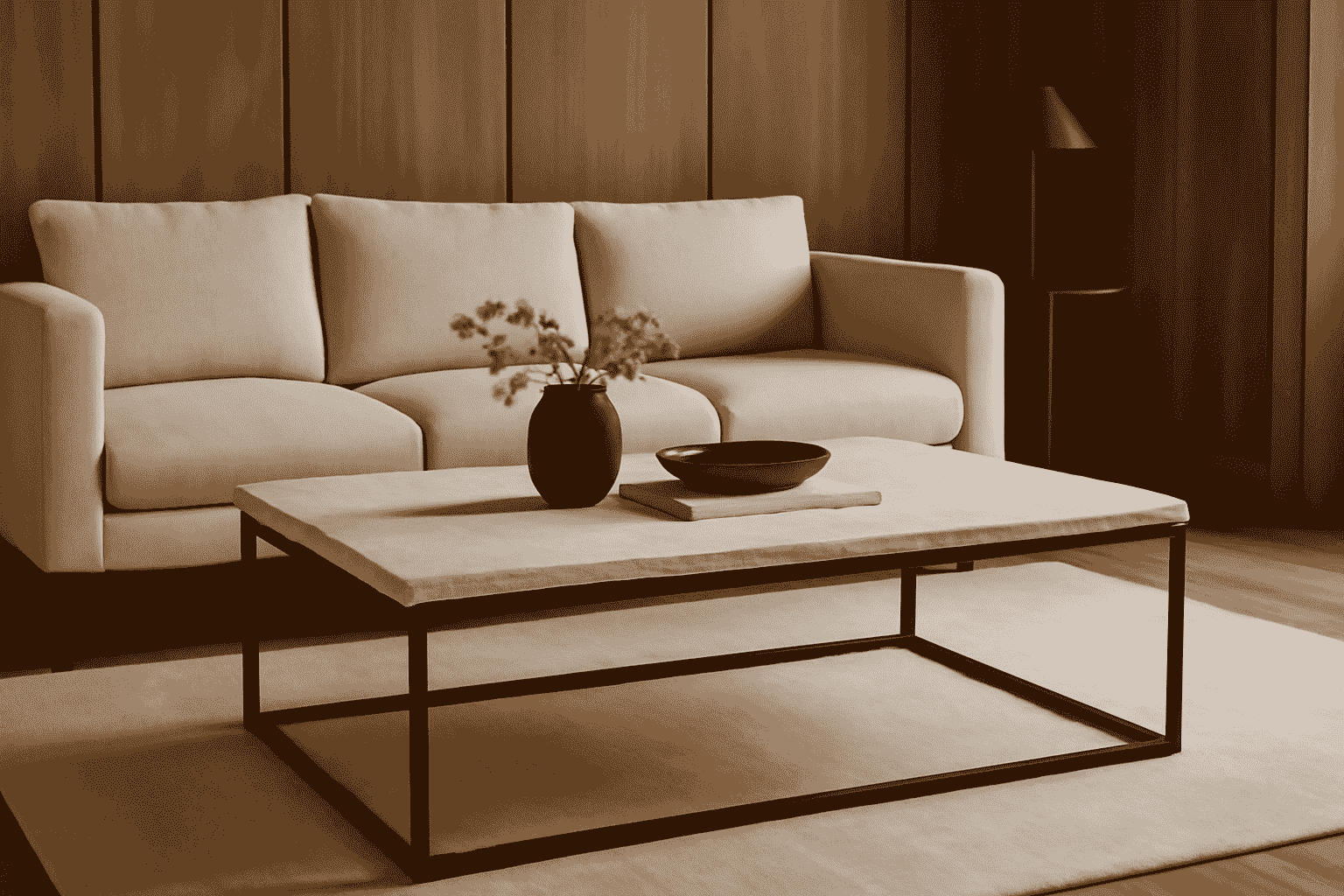
- Edit the Surfaces: Coffee tables and shelves are not catch-alls. Style them with intention: a stack of three books, a single sculpture, a plant.
- Toy Management (For Parents): Use the Container Concept. Kids get one bin for toys. They learn to curate what fits. Rotate toys quarterly to keep novelty without accumulation.
- The Result: The room invites you to sit and be. It facilitates conversation, relaxation, and genuine downtime.
Part 4: How to Start (Without Overwhelming Yourself)
This is not a weekend marathon. That leads to burnout. It’s a practice.
- Start with a “Win Column”: One small, contained space. Your junk drawer. Your bathroom vanity. Clear it completely, clean it, and only put back the essentials. Feel the immediate mental relief. That feeling is your fuel.
- The 20/20 Rule: If you’re hesitating over an item, ask: Could I replace this for less than $20 in less than 20 minutes? If yes, thank it and let it go. It’s the idea you needed, not the object.
- Practice “Mindful Acquisition”: For every new thing you bring in, pause. Where will it live? What will it replace? Does it pass the two core questions? This stops clutter at the door.
- Embrace the “Empty Shelf”: It’s not a failure. It’s a breathing room for your eyes and your mind. It’s a visual pause in the conversation of your home.
Conclusion: Your Home as a Cognitive Oasis
Minimalism, at its heart, is an act of self-care. It is the deliberate creation of an environment that supports your mental well-being rather than sabotages it. You are designing a cognitive oasis—a place where your brain can rest from the overstimulating world, recharge its focus, and connect with what’s truly important.
You don’t need a bigger house. You need less of what doesn’t matter in the one you have. Start today. Pick one drawer, one shelf, one corner. Clear it. Breathe in the space. Feel the quiet mind follow.
Your home should be your sanctuary, not your storage unit. Make it a place that doesn’t just house your body, but actively heals your mind.
FAQs: Minimalism and Mental Health
Q1: I have a family. Is minimalism even possible with kids and a partner?
A: It’s not only possible; it’s incredibly beneficial for families. It reduces the “stuff management” that causes parental burnout. The key is involvement, not imposition. Explain the “Container Concept” for toys. Make tidying up a quick, daily 10-minute family ritual. Focus on shared spaces first, allowing individuals their personal spaces (within reason). It teaches kids valuable lessons about intentionality and reduces their overstimulation, too.
Q2: Doesn’t getting rid of things cause more anxiety for some people?
A: Absolutely. For some, items are tied to security, identity, or memory. If the process creates distress, slow down. This is not about trauma or forcing yourself. Start with easy, non-emotional categories: expired medicines, duplicate kitchen tools, broken items. Seek support if you suspect compulsive hoarding. The goal is peace, not punishment.
Q3: I love my collections and books! Does minimalism mean I have to get rid of them?
A: NO. If your books or collections genuinely spark joy and you engage with them, they are exactly what should stay. Minimalism is about removing the meaningless to make room for the meaningful. The key is to curate, not amass. Display your collection with pride and intention. Keep only the books you love or reference. A curated shelf of beloved books is minimalism—it’s a clear expression of your values.
Q4: How do I deal with guilt over getting rid of gifts or expensive things I never use?
A: The purpose of a gift is the act of giving. That moment is over. The object is now yours. Clinging to it out of guilt dishonors the gift by turning it into a burden. Thank the item for the lesson (perhaps you now know you don’t need more scented candles) and let it go so it can be useful to someone else. For expensive items, sell them and use the money for an experience or a true need. The “sunk cost fallacy” keeps us chained to past mistakes.
Q5: I’ve decluttered before, but the mess always comes back. How do I make it stick?
A: This is the most important question. Decluttering is an event. Minimalism is a lifestyle system. You must build maintenance into your daily rhythm.
- The “One-Minute Rule”: If a task will take less than one minute (hang up a coat, put a dish in the washer, file a paper), do it immediately.
- A “Launching Pad” & “Landing Strip”: Have a dedicated spot by the door for keys, bags, mail. Everything has a “home” it returns to.
- The Nightly 10-Minute Reset: Before bed, walk through main areas and return stray items to their homes. Wake up to a calm space.
It’s about building tiny, sustainable habits that prevent the pile-up.