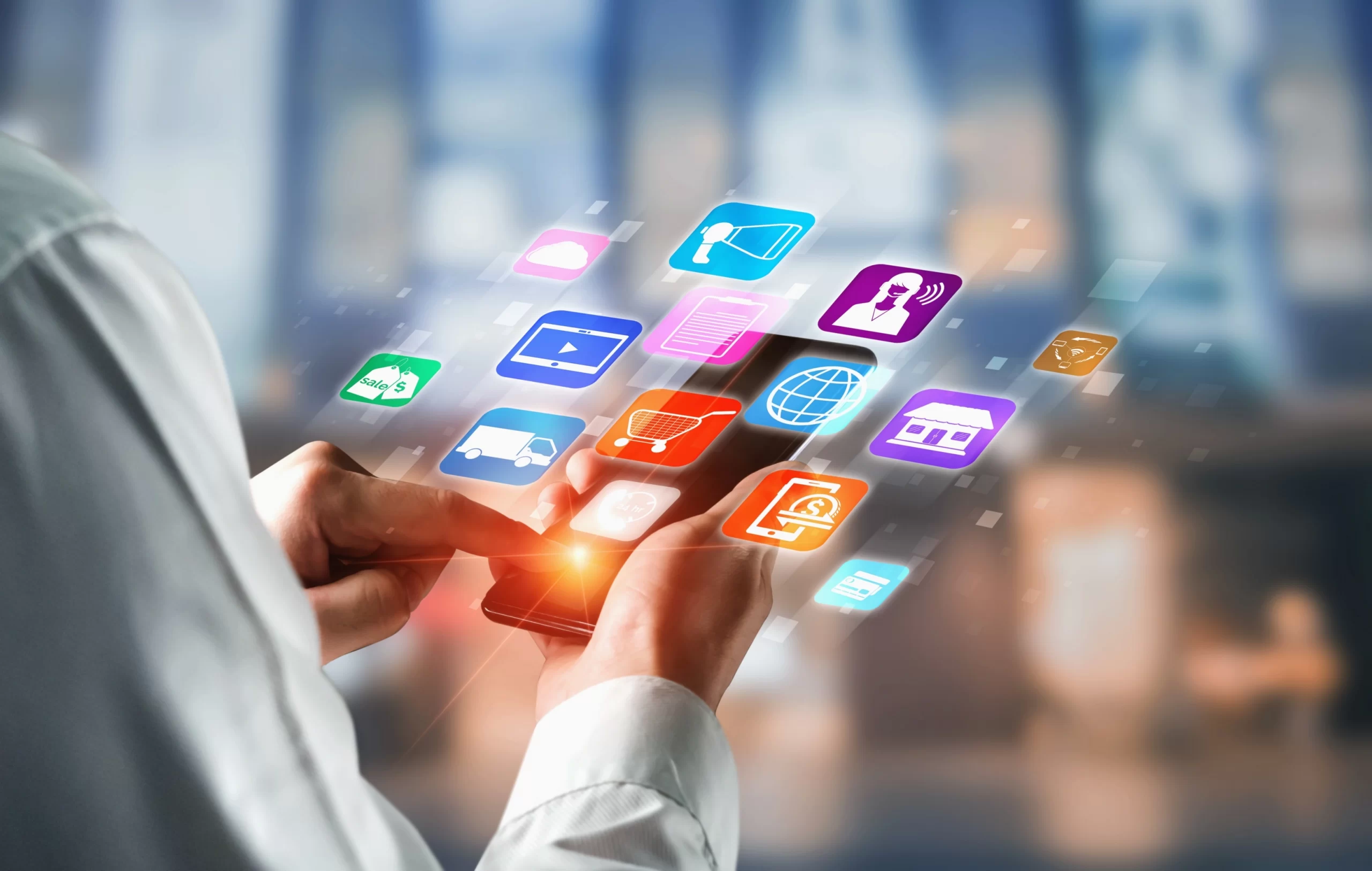
Let’s start with a simple moment from your day. You walk into a store, see a shirt you like, and pull out your phone. You scan a QR code on the tag, and instantly, you’re watching a video of the designer talking about the fabric. You check the price against three online retailers. You see what colors your friends have “hearted” in the app. You might even use an AR filter to see how it looks on you, right there in the aisle. You’re not just shopping; you’re “phygital” shopping.
Welcome to the “Phygital” Age—the seamless, often invisible, collision of our physical and digital lives. It’s not about VR headsets transporting us to a cartoon metaverse. It’s about the digital layer becoming a utility, like electricity, woven into the very fabric of our physical reality. Your phone isn’t a separate device; it’s a remote control for the world.
This isn’t just a fancy portmanteau. It’s a fundamental shift in how we interact with everything: from commerce and work to art and community. The screen is disappearing, and information is becoming ambient. Let’s explore the quiet merger happening right in front of you.
Part 1: The “Phygital” Spectrum: From QR Codes to Digital Twins
The fusion happens on a spectrum, from simple overlays to deep integration.
- Level 1: The Digital Overlay (The Bridge): Using your phone to enhance a physical experience. Scanning a QR code on a museum exhibit to get the audio tour. Using your phone’s camera to translate a foreign menu. Your device is the lens.
- Level 2: The Activated Object (The Conversation): Physical objects with a digital identity. The Nike Adapt sneaker you lace with your phone. The smart packaging on a wine bottle that tells you its story when scanned. The object itself holds the bridge.
- Level 3: The Responsive Environment (The Ecosystem): Spaces that react to your digital presence. Walk into a Starbucks, and your phone tells the barista your usual order is ready. Your smart car adjusts the seat and climate as you approach. The environment knows your digital profile.
- Level 4: The Digital Twin (The Mirror World): A live, data-fed virtual replica of a physical asset. An engineer monitors a real-world jet engine via its perfect digital twin, predicting failures before they happen. A city planner simulates traffic flow in a digital twin of downtown. This is the deepest integration, where the physical and digital are in constant, real-time dialogue.
Part 2: Where You’re Already Living “Phygitally” (You Just Don’t Call It That)
This isn’t futuristic. It’s in your pocket and your home.
1. Retail & Commerce: The End of “Online vs. In-Store”
- BOPIS (Buy Online, Pick Up In-Store): The ultimate phygital hybrid. You research digitally, commit physically, and collect in a blended space.
- AR Try-On: Warby Parker (eyeglasses), Sephora (makeup), IKEA (furniture). You project the digital product onto your physical self or home before buying.
- Social Shopping: Livestream shopping events where you watch a host in real-time, chat with other viewers, and buy with one click. It’s QVC for the TikTok generation—a blend of physical demonstration and digital community.
2. Work & Collaboration: The Hybrid Office is “Phygital”
- The “Hot Desk” That Knows You: You book a desk via an app. When you arrive, it adjusts the monitor height, logs you into the workstation, and connects you to the room’s VC system.
- Hybrid Meetings: The meeting is neither fully physical nor fully digital. People in a conference room share space with faces on a screen, using digital whiteboards (like Miro) that everyone—remote and in-person—can interact with simultaneously. The room itself is a phygital object.
3. Fitness & Wellness: The Gamified Body
- Peloton / Mirror: A physical bike or mirror becomes a portal to a live, digital class with a leaderboard and social community. Your physical exertion is tracked, scored, and compared in real-time.
- Strava: Your physical run or ride becomes a digital artifact, shared on a social feed, creating a phygital community of athletes.
4. Art & Entertainment: Storytelling Leaks Out of the Frame
- Projection-Mapping: Digital animations are mapped onto physical buildings, turning architecture into a dynamic canvas.
- Immersive Exhibits (like teamLab): Rooms where your physical movement (walking, touching) triggers digital visuals and sounds, making you part of the art.
Part 3: The Driving Forces: Why This Is Happening Now
Three big tech shifts have made this inevitable:
- Ubiquitous Connectivity (5G/IoT): Fast, reliable internet is everywhere. Billions of sensors (Internet of Things) in everything from watches to streetlights create a data-rich physical world.
- The Smartphone as a Sensory Proxy: Your phone has a high-res camera, LiDAR, GPS, NFC, and a powerful processor. It’s the perfect tool to scan, interpret, and interact with the “phygital” layer.
- Cloud Computing & AI: The heavy processing—recognizing an object, running an AR simulation, analyzing your preferences—happens instantly in the cloud, delivered to your device in real-time.
Part 4: The Implications: The Good, The Bad, and The “Weird”
The Good (The Convenience & Magic):
- Hyper-Personalization: Your experiences can be tailored in real-time based on your data. The museum shows you exhibits matching your interests.
- Enhanced Decision-Making: Trying on clothes or furniture in AR saves time, reduces returns, and increases confidence.
- Deeper Learning & Engagement: History comes alive when you point your phone at a ruin and see it reconstructed.
The Bad (The Privacy & Overload):
- The Surveillance Layer: Every phygital interaction is a data point. Your path through a store, your dwell time on a product, your facial expression while trying it on—all can be tracked and analyzed.
- Digital Fatigue in Physical Spaces: Will we ever be “off”? If a walk in the park triggers AR pop-ups about the trees, where is the rest?
- The Digital Divide 2.0: Access to the latest smartphone and data plans becomes a prerequisite for full participation in civic and commercial life.
The “Weird” (The Philosophical Shake-Up):
- Ownership Gets Fuzzy: Do you own the digital skin for your sneakers? If a company’s servers go down, does your “smart” furniture become dumb?
- The “Death of Serendipity”: If every experience is algorithmically personalized, do we lose the joy of random, unchanneled discovery?
- Reality Itself Becomes Optional: With persistent AR filters, will we all be walking around seeing slightly (or drastically) altered versions of the same street?
Conclusion: Learning to Navigate the Blended World
“Phygital” is not a trend; it’s the new baseline. The seams between atoms and bits are dissolving. Our task is not to resist it, but to navigate it with intention.
We must ask new questions:
- Consent: How do we give meaningful consent to being tracked in physical spaces?
- Design: How do we design phygital experiences that enhance humanity, not just consumption?
- Equity: How do we ensure this blended world doesn’t create a new underclass?
Start by noticing it. That’s step one. See the QR codes, use the AR try-on, feel the way your digital and physical actions are starting to weave together. Then, decide consciously where you want that blend to enrich your life, and where you need to draw a line to protect your peace, your privacy, and your unmediated experience of a rainy afternoon or a friend’s smile.
The remote control is in your hand. It’s time to decide what, in this brave new blended world, you actually want to turn on.
FAQs: Your “Phygital” World Questions
Q1: Is this just a fancy word for “using your phone in a store”?
A: It’s the evolution of that. It’s when the store uses you back. When the physical space recognizes your phone (via Bluetooth/Wi-Fi), knows your purchase history, and changes the displays or offers you personalized discounts as you walk by. Your phone is the key, but the intelligence and interaction are embedded in the environment itself. It’s a two-way conversation, not a one-way lookup.
Q2: What’s the difference between “Phygital” and the “Metaverse”?
A: They are cousins, but with opposite vectors.
- The Metaverse (as pitched by Meta/Zuckerberg): Primarily about escaping the physical into a persistent, immersive digital world (via VR/AR headsets).
- The Phygital World: About enhancing the physical by bringing a useful digital layer into it. It uses the world we already live in as the primary canvas. Think of Metaverse as a digital theme park you visit; Phygital is your hometown with a smart, invisible HUD (Heads-Up Display).
Q3: I find this overwhelming. Can I opt out?
A: You can minimize your footprint, but complete opting out will become increasingly difficult, like opting out of electricity. You can:
- Disable Bluetooth/Wi-Fi when not needed.
- Use privacy-focused browsers and search engines.
- Prefer retailers with traditional, non-tracked checkouts.
- Simply not use your phone in certain contexts. The experience may be less “enhanced,” but it will be yours. The choice to engage is still your most powerful tool.
Q4: What industry will be most transformed by this?
A: Healthcare. The phygital potential here is life-changing.
- Smart pills that transmit data from your digestive tract.
- AR-assisted surgery where a surgeon sees vital stats and scan overlays projected onto the patient.
- Remote patient monitoring where your home becomes a diagnostic suite, sending data to your doctor.
- Digital twin of a patient’s heart to simulate surgeries.
The blend of physical body and digital data will redefine medicine.
Q5: What’s a simple, positive “phygital” experience I can try today?
A: Visit a museum or art gallery that uses an augmented reality app. Many now have apps where you point your phone at a painting or artifact, and it comes to life—showing you the artist’s process, revealing hidden layers, or telling a story. It’s a perfect, low-stakes example of how a digital layer can add profound depth and context to a physical experience, turning observation into immersion.