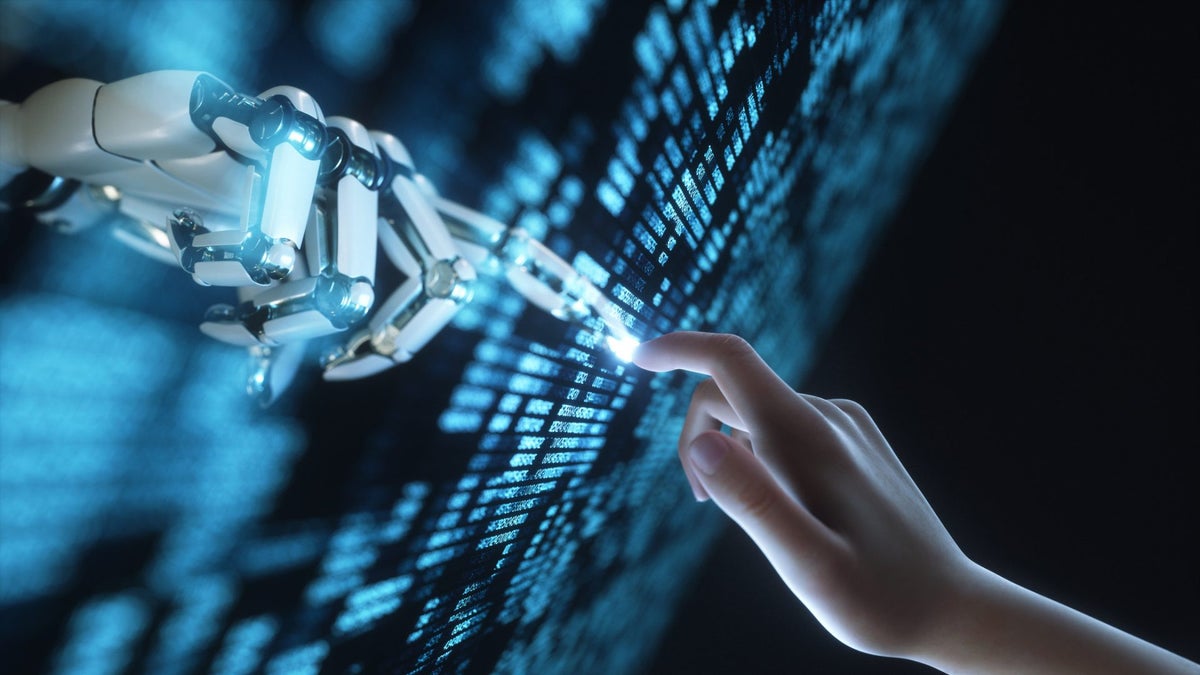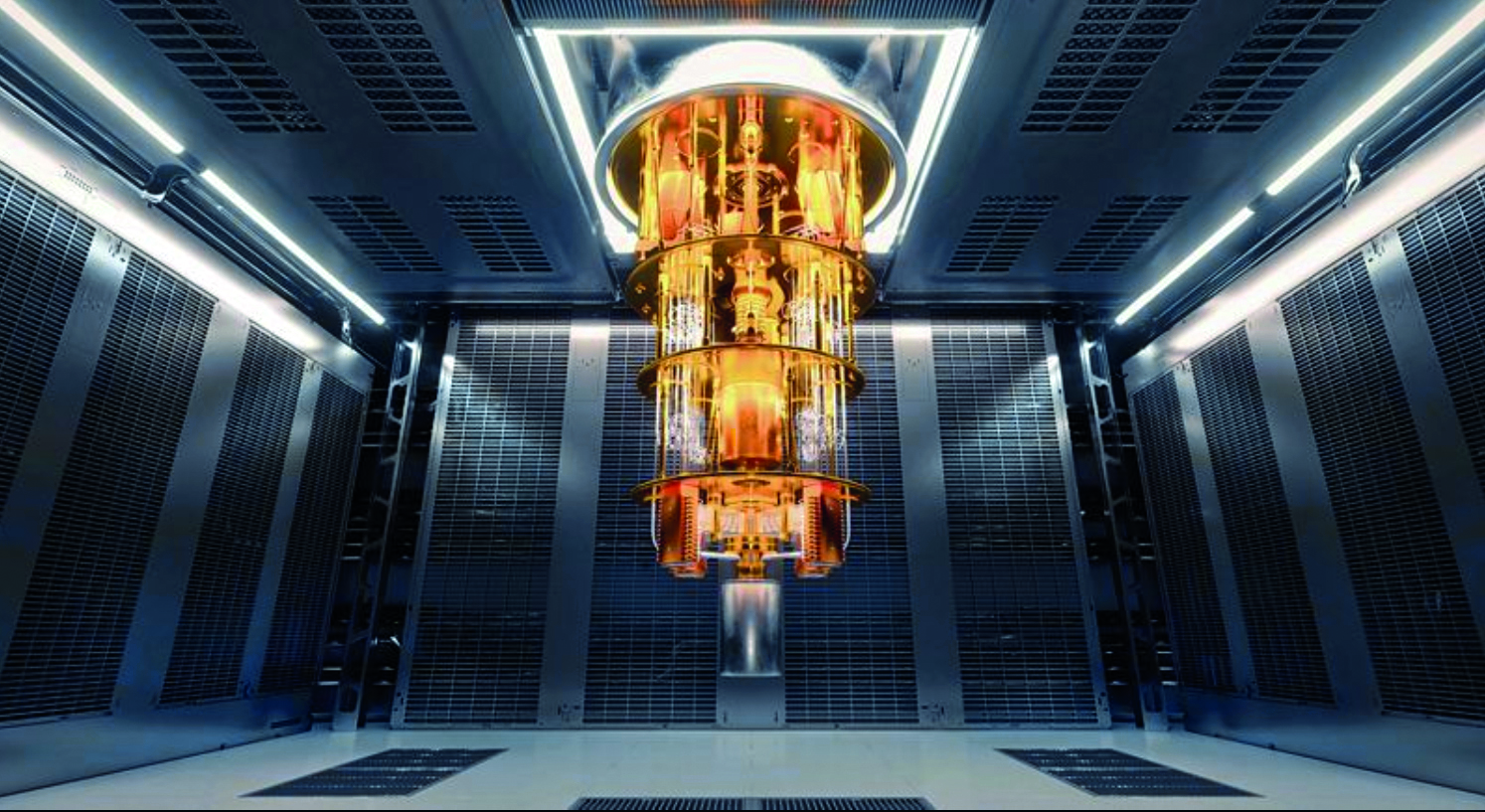
The headlines scream it: “Quantum Computer Solves Impossible Problem in Seconds!” “Quantum Supremacy Achieved!” It sounds like science fiction made real. A machine so powerful it makes today’s supercomputers look like abacuses. It’s easy to imagine this means tomorrow you’ll have a quantum chip in your phone, or that all your passwords will be instantly cracked.
Let’s hit pause on the hype. The truth is both more mundane and far more profound. We have crossed a historic threshold, but we’re standing at the very beginning of a new continent, not arriving at a finished city. Understanding what “quantum supremacy” really is—and what it isn’t—is crucial. Because this isn’t just about faster computers. It’s about opening a door to a new kind of reality, where the rules of physics we’ve lived by for centuries no longer fully apply.
Let’s demystify the quantum leap.
Part 1: What “Supremacy” Actually Means (The Bar Was Surprisingly Low)
First, the term itself is misleading. “Quantum supremacy” is a specific, technical benchmark. It doesn’t mean a quantum computer is now superior at all tasks. It means one has performed a single, deliberately crafted calculation that would be essentially impossible for even the world’s fastest classical supercomputer to complete in a reasonable time (like 10,000 years).
Think of it like this:
- Classical Computers (Your laptop, a supercomputer): Use bits. A bit is like a light switch: it’s either ON (1) or OFF (0). Every calculation is a sequence of these binary states.
- Quantum Computers: Use qubits. Through the mind-bending property of superposition, a qubit can be 1, 0, or both at the same time. Through entanglement, qubits can be linked so that the state of one instantly influences another, no matter the distance.
This allows a quantum computer to explore a multitude of possible solutions simultaneously. For the specific, narrow problem of checking the output of a random quantum circuit (the “supremacy” task), this parallel processing is a killer app.
The key takeaway: They built a machine that is exceptionally good at one very weird, useless thing that is perfectly suited to its quantum nature. It’s like inventing a car that can only drive in perfect, endless circles at 500 mph. It proves the engine works phenomenally, but it’s not yet a vehicle you can take to the grocery store.
Part 2: The “So What?” – From Supremacy to Utility
So, we have a car that drives in circles. When do we get the quantum pickup truck?
The next era is “Quantum Utility” or “Quantum Advantage.” This is when a quantum computer solves a practical, real-world problem faster or cheaper than a classical computer can. This is the true beginning of the revolution. The problems it will crack first are ones that are natively quantum or involve massive, combinatorial complexity.
The Killer Apps (Coming This Decade):
- Materials Science & Chemistry: Simulating molecules at the quantum level to design:
- Room-temperature superconductors (revolutionizing energy grids, maglev trains).
- More efficient fertilizers (the Haber-Bosch process uses ~2% of global energy; a quantum-improved catalyst could slash that).
- New batteries and solar cell materials.
- Tailor-made pharmaceuticals with fewer side effects.
- Logistics & Optimization: The “Traveling Salesman Problem” on steroids.
- Ultra-efficient global shipping routes.
- Perfectly optimized traffic flow in mega-cities.
- Financial portfolio optimization in volatile markets.
- Artificial Intelligence: Training certain types of AI models on quantum hardware could be exponentially faster, leading to breakthroughs in pattern recognition for things like drug discovery or climate modeling.
Part 3: What It Doesn’t Mean (Debunking the Myths)
Let’s calm the most common fears and misconceptions.
Myth 1: “All encryption is broken tomorrow.”
- Reality: Current encryption (like RSA) is indeed vulnerable to a sufficiently powerful quantum computer running Shor’s algorithm. However, the machine needed to do this requires millions of stable, error-corrected qubits. We currently have hundreds of noisy ones. We likely have 5-15 years before this is a real threat. Crucially, the world is already preparing with Post-Quantum Cryptography (PQC)—new, quantum-resistant encryption algorithms. The transition will be a massive IT headache, not an overnight collapse.
Myth 2: “Quantum computers will replace classical computers.”
- Reality: They are specialized co-processors, not general replacements. You won’t browse the web or write a document on one. Think of it like this: You don’t use a supercollider to fry an egg. You’ll send specific, massively complex problems to a quantum cloud service, and it will send back the answer to your classical computer.
Myth 3: “This proves parallel universes/consciousness is quantum.”
- Reality: Quantum mechanics is famously weird and open to interpretation. The “many-worlds” interpretation is one compelling philosophical idea, but quantum supremacy is an engineering achievement, not proof of a specific interpretation. It proves we can harness quantum weirdness for computation, full stop. It doesn’t validate any particular metaphysical claim.
Part 4: The Quantum Future: A Bifurcated World
The quantum era won’t arrive evenly. It will create a new kind of divide.
- The “Have-Qubits” vs. “Have-Nots”: Nations and corporations with access to quantum computing will have an almost unimaginable advantage in science, materials, finance, and intelligence. This is a new, strategic high ground, fueling a global race (US vs. China vs. EU) as critical as the space race.
- The New “Digital Divide”: Beyond internet access, it will be about access to quantum-powered insights. Will it be a tool for solving humanity’s grand challenges (climate, disease), or for further consolidation of power and wealth? The ethics are being written now.
Conclusion: The Dawn of a New Computational Era
We are witnessing the equivalent of the Wright Brothers’ first flight at Kitty Hawk. The plane only flew 120 feet. It wasn’t useful for travel, war, or commerce. But it proved a heavier-than-air machine could fly. It revealed the blueprint for the 20th century.
Quantum supremacy is our 120-foot flight. It is a proof-of-concept that changes everything, even though its immediate utility is zero. It tells us the new physics of computation are real and programmable.
Your life won’t change tomorrow. But your children will live in a world where:
- Diseases are cured by molecules designed in silico.
- Global logistics have near-zero waste.
- And yes, our digital security will rest on entirely new mathematical foundations.
The leap has been made. Now, we begin the long, hard, spectacular work of building the world it makes possible. Pay attention, not with fear, but with the awe of watching a new universe of possibility blink into existence.
FAQs: Your Quantum Computing Questions
Q1: How soon before I see this affect my daily life?
A: Direct consumer impact is 10-20 years away. You’ll see it first in the form of new products and materials: better batteries in your devices, more effective medications, lighter and stronger materials in your car. The computer itself will remain hidden in research labs and cloud data centers, working on problems behind the scenes.
Q2: Should I be worried about my Bitcoin and online banking?
A: Not in the short term. As mentioned, breaking current encryption requires a much larger machine. The crypto and finance worlds are acutely aware of the threat. Long before a quantum computer can break Bitcoin’s cryptography, the Bitcoin network (and all major banks) will have migrated to quantum-resistant algorithms. It will be a planned transition, not a surprise attack.
Q3: Could quantum computing help solve climate change?
A: It is one of our most promising tools. Its potential to model complex climate systems with unprecedented accuracy, discover new materials for carbon capture, and revolutionize energy storage and fusion makes it a critical technology for the climate fight. It won’t be a magic bullet, but it could provide the breakthrough insights needed to accelerate solutions.
Q4: What’s the biggest technical hurdle holding quantum computing back right now?
A: Qubit stability and error correction. Qubits are incredibly fragile. Heat, vibration, even stray electromagnetic waves can cause them to lose their quantum state (a process called decoherence). Current machines are “noisy.” The holy grail is building fault-tolerant quantum computers with error-corrected “logical qubits” (where many physical qubits work together to act as one stable qubit). This is the main engineering mountain to climb.
Q5: As a student or professional, should I learn about quantum computing?
A: Absolutely. You don’t need a PhD in physics. Learn the concepts and the potential. Understand how it might disrupt your industry (finance, logistics, chemistry, AI). The biggest opportunities will be for “quantum-aware” classical programmers, chemists, and business strategists who can bridge the gap between this strange new hardware and real-world problems. It’s the next frontier of tech literacy.